MANUFACTURING
From Reactive to Predictive: How AI Is Reshaping Maintenance for Manufacturers
A machine often signals trouble before it fails. Predictive maintenance reads the warning, and the workflow around it turns the warning into a planned repair.
BY SIMPLYASK · MAR 3, 2026 · 6 MIN READ
En esta página
- What does unplanned downtime really cost?
- How did maintenance get here?
- How does AI make prediction possible?
- What makes predictive maintenance hard to deploy?
- How do you automate the whole maintenance cycle?
- How does predictive maintenance connect to quality?
- What should you expect from the investment?
- How do you start?
- Questions
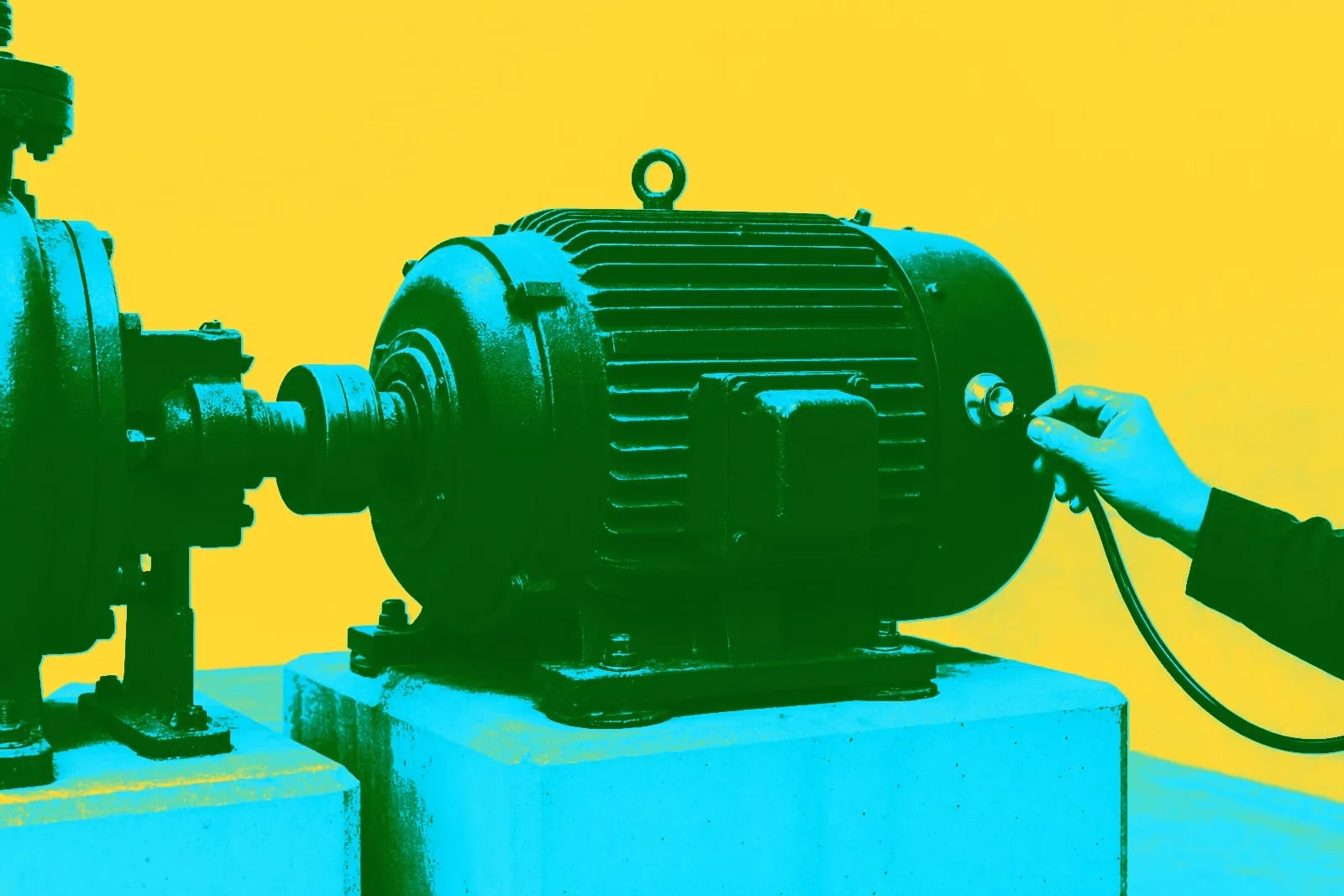
Predictive maintenance uses sensor data and AI to estimate when a machine is likely to fail, so the repair happens in a planned window instead of at 2 AM on a Saturday. It pays off when the prediction triggers the whole workflow: the work order, the parts, the schedule change and the sign-off.
A packaging machine on a food line stops in the middle of the night. Maintenance is called in at overtime rates. Hours pass while they diagnose it. The line sits idle, orders slip, and rush work follows. The machine had been signalling for weeks, with vibration a little high and temperature creeping up, but nobody was looking at the data in a systematic way. Had they known, they would have replaced the part during a planned window.
What does unplanned downtime really cost?
Unplanned failures do more than stop a machine. The direct costs are lost production, overtime, expedited parts and emergency contractors.
The indirect costs are often larger. Customers who expected a shipment on a given date may order elsewhere. Teams run equipment outside normal parameters to catch up, which raises the risk of defects. Suppliers miss their regular orders, and your downstream customers feel the delay. One failure sets off a chain.
Say an hour of downtime costs a plant $25,000. A four-hour stoppage then costs $100,000 before any indirect cost is counted. That is a hypothetical. Run the same sum with your own number.
How did maintenance get here?
Each approach fixed a weakness in the one before.
Reactive maintenance runs equipment until it breaks. It costs little between failures and a lot during them, and failures arrive at the worst moments.
Preventive maintenance services equipment on a fixed schedule: every six months, every 10,000 operating hours. It removes many crises. But it ignores the real condition of the equipment, so you replace parts that still have life in them while another part fails on its own timetable.
Predictive maintenance monitors equipment continuously, analyzes the data, and schedules work shortly before failure is likely. You avoid crisis failures and also avoid replacing what does not need it.
How does AI make prediction possible?
Manufacturers have tried to predict failures for decades. What changed is AI's ability to find patterns in the volume of data modern equipment produces. Vibration, temperature, pressure, humidity and current sensors stream constantly. No analyst can watch all of it, and subtle patterns are easy to miss.
Models trained on historical equipment data can recognize the signature that precedes a failure: a particular combination of vibration and temperature that shows up weeks before a bearing gives out. The same approach applies to wear in rotating equipment, corrosion and fatigue cracks.
From there, a model can estimate probability and timing. Instead of "maintenance is needed soon," a system can report that a bearing is likely to fail within a stated number of days if conditions hold. It can also estimate remaining useful life. With three weeks left, you replace the part in the next planned window. With two days left, you expedite it or slow the machine to reach the window.
What makes predictive maintenance hard to deploy?
The model is only one piece. Plants typically run older SCADA systems on proprietary platforms behind firewalls, with newer IoT sensors in a separate network. Linking the two is technical and often specific to each site.
You need dependable data pipelines: reliable, since gaps cause missed predictions; secure, since sensor data reveals production detail; and able to grow as you add equipment.
You also need to connect results to the systems people use. When a model predicts a bearing will fail in five days, the CMMS has to update the maintenance schedule, and production planners have to see it so they can adjust the plan. Many plants lack that integration, and the prediction goes nowhere.
How do you automate the whole maintenance cycle?
The prediction is the start. The value comes from the work that follows, which is a Process across several systems and people.
On the SimplyAsk platform, an AI App can hold that Process together with the AI Agents and human tasks around it. When a prediction comes in, the Process can:
- Create a work order with the predicted failure and the recommended action.
- Check for replacement parts and order them if needed.
- Find the next planned maintenance window.
- Tell the maintenance scheduler and production planning, so the schedule moves with it.
- After the work, log what was done and update the equipment history.
Work orders become tasks routed to the right specialists, tracked to completion and escalated if something unexpected comes up. A supervisor can require approval before a costly or safety-related repair goes ahead. One audit trail records what the AI triggered and what people decided, which matters when a maintenance decision is questioned later. Connections to your CMMS and ERP come through the platform's integrations, and you can build the Process visually or describe it to Cue.
Maintenance schedulers can then plan weeks ahead, and production planning can build the work into the normal schedule.
How does predictive maintenance connect to quality?
Equipment near failure often makes defective products before it stops. As a bearing wears or an assembly loosens, dimensions, surface finish and consistency start to drift. AI quality monitoring can see that drift. When quality indicators trend toward the specification limit, worn equipment is often the cause.
Combining the two lets you act before a quality excursion. Maintenance can be triggered by equipment condition and quality trends together, which cuts scrap and rework and reduces the chance of shipping a bad lot.
What should you expect from the investment?
Treat published ROI ranges with caution and estimate from your plant's numbers. The main effects are well understood:
- Less unplanned downtime. Estimate it from downtime hours and cost per hour at your plant.
- Longer equipment life. Replacing parts just before failure reduces stress on neighbouring components.
- Leaner spare parts. With more certainty about need, you can hold less stock "just in case."
- Better use of maintenance labour. Planned work replaces emergency overtime and diagnosis under pressure.
How do you start?
Start with a pilot. Choose one critical line or a few high-value assets. Install sensors, collect several months of history, build baseline models, and check their predictions against real maintenance and failure events. Expand once the approach has proved itself on your equipment with your data.
Favour equipment where failure is most expensive, where replacement parts have long lead times, and where failures are frequent enough to teach the model. Then plan the people side. Predictive maintenance asks for data skills alongside mechanical ones, planned scheduling instead of reactive response, and a habit of acting on data. The technical work and the change management have to move together.
Questions
What is predictive maintenance?
It is maintenance scheduled by the likely condition of the equipment, based on sensor data and AI models, instead of by fixed intervals or after a failure.
How is it different from preventive maintenance?
Preventive maintenance follows a calendar or an hour count. Predictive maintenance follows the actual condition of the machine, so parts are replaced when they need it.
What does a manufacturer need to get started?
Continuous data from critical equipment, a model validated against real failures, and a workflow that turns each prediction into a work order, parts and a schedule change. Start with one line.
Moving from reactive to predictive changes how a plant runs. To see how the platform handles the workflow side, explore what it does for manufacturing. For the scheduling side, read Why Production Scheduling Is the Highest-ROI AI Investment.
COMPARTIR
SIGUE LEYENDO
-
How to Automate Inventory Reconciliation in 6 Steps (2027)
Your system says 100 units and the shelf holds 62. Six steps to make records correct themselves against reality on a schedule, instead of once a year.

-
How to Automate the Engineering Change Order Process in Manufacturing
Most engineering change orders stall in the process around the change: the inbox, the approval queue, the handoffs between systems. Here are five steps that take the waiting out.